Winter brings more than colder temperatures and holiday celebrations. It also introduces a predictable rise in insurance claims tied to weather damage, home maintenance issues, travel, and seasonal activities. For homeowners, renters, and drivers, this time of year can quietly expose gaps in coverage or increase the likelihood of filing a costly claim.
Understanding how winter conditions and holiday behavior affect insurance is one of the most effective ways to reduce risk, avoid denied claims, and keep premiums stable. This guide pulls together proven insights on winter insurance risks and prevention, explaining not just what happens during winter, but why insurers see claim spikes—and what practical steps you can take to protect your home, vehicle, and finances.
Why Winter Is a High-Risk Season for Insurance Claims
Insurance data consistently shows that winter months bring a noticeable increase in claims across homeowners, auto, and liability policies. The reasons are not complicated, but they are often underestimated.
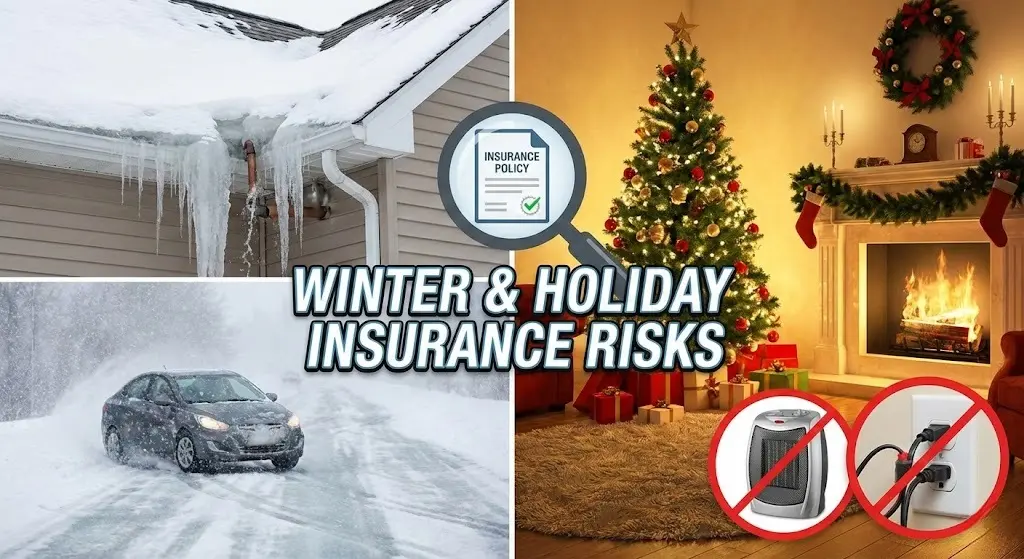
Cold temperatures put stress on homes through freezing pipes, ice buildup, and heating systems running nonstop. Snow and ice create dangerous conditions on roads, driveways, and sidewalks. At the same time, the holiday season increases travel, gatherings, decorations, and electrical usage—all of which raise the odds of accidents or property damage.
What makes winter especially costly is that many of these losses happen quickly and escalate fast. A frozen pipe can burst and flood a home in minutes. An ice dam can cause hidden water damage behind walls. A small fire started by a space heater or holiday lights can spread before anyone notices. These are not minor claims, and they often lead to expensive repairs and temporary displacement.
How Winter Weather Impacts Home Insurance
Frozen and Burst Pipes
Frozen pipes are one of the most common and expensive winter insurance claims. When water freezes, it expands, increasing pressure inside pipes until they crack or burst. Once temperatures rise or pressure shifts, water can pour into walls, floors, and ceilings.
Insurance generally covers sudden and accidental water damage from burst pipes, but coverage often depends on whether reasonable precautions were taken. Insurers may deny or limit claims if the home was left unheated, if pipes were known to be exposed and not insulated, or if the property was vacant without proper safeguards.
Homes most at risk include older properties, houses with plumbing on exterior walls, and homes left unattended during winter travel.
Snow Load, Ice Dams, and Roof Damage
Heavy snow accumulation can strain roofs, gutters, and structural supports. While most roofs are designed to handle snow, prolonged buildup or unusually wet, heavy snow increases the risk of collapse or structural damage.
Ice dams are another major winter issue. They form when heat escapes through the roof, melting snow that later refreezes near the edges. This creates a barrier that traps water, forcing it under shingles and into the home. The resulting damage often appears as stains, warped ceilings, or peeling paint, long after the ice has melted.
Home insurance typically covers damage caused by the weight of ice and snow, but again, maintenance matters. Poor insulation, clogged gutters, or ignored ventilation issues can complicate claims.
Winter Fires and Heating Hazards
Fire risk increases during winter, particularly around the holidays. Heating systems run longer, fireplaces are used more often, and space heaters become common. Add holiday lights, candles, and cooking for gatherings, and the risk multiplies.
Cooking fires remain the leading cause of home fires during the winter months. Candle-related fires spike during holidays, especially when decorations are placed too close or candles are left unattended. Space heaters, when used improperly or placed near flammable materials, are another frequent source of claims.
Home insurance generally covers fire damage, but insurers may investigate whether heating equipment was used safely and maintained properly.
Liability Risks from Ice and Snow
Winter weather doesn’t just threaten structures—it creates legal exposure. Slips and falls on icy driveways, sidewalks, or steps can result in liability claims if guests, delivery drivers, or neighbors are injured on your property.
Homeowners insurance typically includes personal liability coverage, but it assumes reasonable care was taken. Failing to clear walkways or ignoring known hazards can increase the chance of a claim or legal dispute.
Auto Insurance Risks During Winter and the Holidays
Winter driving conditions are a leading contributor to seasonal claim spikes. Snow, ice, reduced visibility, and longer stopping distances all increase accident risk. The holidays add another layer through heavier traffic, unfamiliar routes, and rushed driving.
Even low-speed accidents can lead to costly claims due to modern vehicle repair costs. Parking lot collisions, sliding into curbs, and multi-car accidents become more common as road conditions deteriorate.
Auto insurance generally covers winter-related accidents, but claims can still affect premiums. Drivers who fail to adapt to conditions—such as driving too fast for icy roads—may face greater fault assessments.
Holiday Season Risks That Impact Insurance
The holiday season changes how people use their homes and vehicles, often in ways that insurers associate with higher losses.
Travel increases dramatically, leaving homes unoccupied for days or weeks. An undetected leak or heating failure during this time can result in severe damage. Social gatherings increase foot traffic, raising liability exposure. New gifts and packages create theft risks, especially when deliveries are left unattended.
Electrical systems are also under strain. Extension cords, overloaded outlets, and older light strands contribute to fire hazards. These risks are not unique to winter, but they are concentrated during this time of year.
What Home Insurance Typically Covers in Winter
Standard homeowners insurance policies usually cover:
- Sudden damage caused by frozen or burst pipes
- Structural damage from snow or ice weight
- Fire damage from heating systems, candles, or electrical issues
- Damage caused by fallen trees due to winter storms
- Liability claims from injuries on your property
However, there are important exclusions and limitations.
Flooding caused by melting snow or heavy rain is usually not covered without a separate flood policy. Damage resulting from neglect or failure to maintain the home may be denied. Cosmetic damage may be excluded, depending on the policy.
Understanding these distinctions before winter begins is essential.
Practical Ways to Reduce Winter Insurance Claims
Protecting Your Plumbing System
Preventing frozen pipes is one of the most effective ways to avoid major winter losses. Insulating exposed pipes, especially in basements, crawl spaces, garages, and exterior walls, helps maintain temperature. Sealing drafts near plumbing and allowing warm air to circulate can also make a difference.
During extreme cold, letting faucets drip slightly reduces pressure buildup. Knowing where your main water shutoff valve is located allows you to act quickly if a pipe bursts.
Homes left vacant during winter should never have the heat completely turned off. Many insurers recommend maintaining a minimum indoor temperature to reduce risk.
Managing Roofs, Gutters, and Trees
Cleaning gutters before winter helps prevent ice dams by allowing water to drain properly. Proper attic insulation and ventilation reduce heat loss that leads to uneven snow melting.
Tree maintenance is another often-overlooked step. Dead or weakened branches are more likely to fall under snow or ice weight, damaging roofs, vehicles, or power lines. Trimming trees before winter reduces this risk significantly.
Reducing Fire Hazards Indoors
Heating systems should be inspected and serviced before winter use. Chimneys and fireplaces need regular cleaning to prevent chimney fires.
Space heaters should be placed well away from flammable materials and never left unattended. Holiday lights should be checked for frayed wires or damage, and candles should be used with caution, especially around decorations or pets.
Smoke detectors and carbon monoxide detectors should be tested regularly, with batteries replaced as needed.
Preventing Slips, Falls, and Liability Claims
Keeping walkways, steps, and driveways clear of snow and ice is critical for safety and liability protection. Applying ice melt promptly and repairing uneven surfaces helps reduce the risk of injuries.
Handrails, outdoor lighting, and visible pathways are especially important during shorter winter days when visibility is reduced.
Preparing Vehicles for Winter Conditions
Winterizing your vehicle reduces accident risk and breakdowns. Tires should have adequate tread and proper pressure, as cold temperatures reduce air pressure. Batteries, antifreeze levels, brakes, and windshield wipers should be checked before winter travel increases.
Driving habits matter just as much. Slowing down, increasing following distance, and avoiding sudden movements help maintain control on slippery roads.
Reviewing Your Insurance Coverage Before Winter
Winter is an ideal time to review insurance policies. Life changes during the year—home renovations, new valuables, or changes in travel habits—can leave coverage outdated.
Homeowners should ensure their dwelling coverage reflects current rebuilding costs, not just market value. Personal property coverage should account for new purchases, especially high-value items that may require additional endorsements.
Auto insurance deductibles and coverage limits should be reviewed to ensure they align with winter driving risks. Liability limits are particularly important during a season when accidents and injuries are more common.
Common Reasons Winter Claims Get Denied
Many policyholders are surprised when a winter claim is delayed or denied. Common reasons include:
- Evidence of long-term neglect or lack of maintenance
- Homes left unheated or unmonitored during extended absences
- Failure to take reasonable steps to prevent known risks
- Damage that falls under excluded categories, such as flooding
Being proactive before winter begins reduces the chance of disputes and improves claim outcomes if something does go wrong.
The Financial Impact of Winter Insurance Claims
Beyond repairs and deductibles, winter claims can affect future insurance costs. Multiple claims within a short period may lead to premium increases or reduced coverage options. Some insurers may require higher deductibles or exclude certain risks after repeated losses.
Preventive maintenance is often far less expensive than the long-term cost of filing a claim. From an insurance perspective, winter preparation is not just about safety—it is a financial strategy.
A Smarter Approach to Winter Risk
Winter insurance risks are predictable, which means they are also manageable. Frozen pipes, roof damage, fires, auto accidents, and liability claims happen every year for the same reasons. Homeowners and drivers who understand these patterns can take practical steps to reduce exposure.
Insurance works best when it is paired with preparation. Policies are designed to protect against sudden, unavoidable losses—not preventable damage caused by neglect. By maintaining your home, adapting driving habits, and reviewing coverage before winter peaks, you reduce both the likelihood and the impact of a claim.
Final Thoughts
Winter and the holiday season bring unique challenges that directly affect insurance coverage and claims. Cold weather stresses homes, increases driving hazards, and amplifies fire and liability risks. The good news is that most winter losses can be reduced—or avoided entirely—with informed preparation.
Taking time before and during winter to protect your property, adjust habits, and confirm your coverage is one of the most effective ways to safeguard your finances. Insurance is a safety net, but winter readiness is the first line of defense.