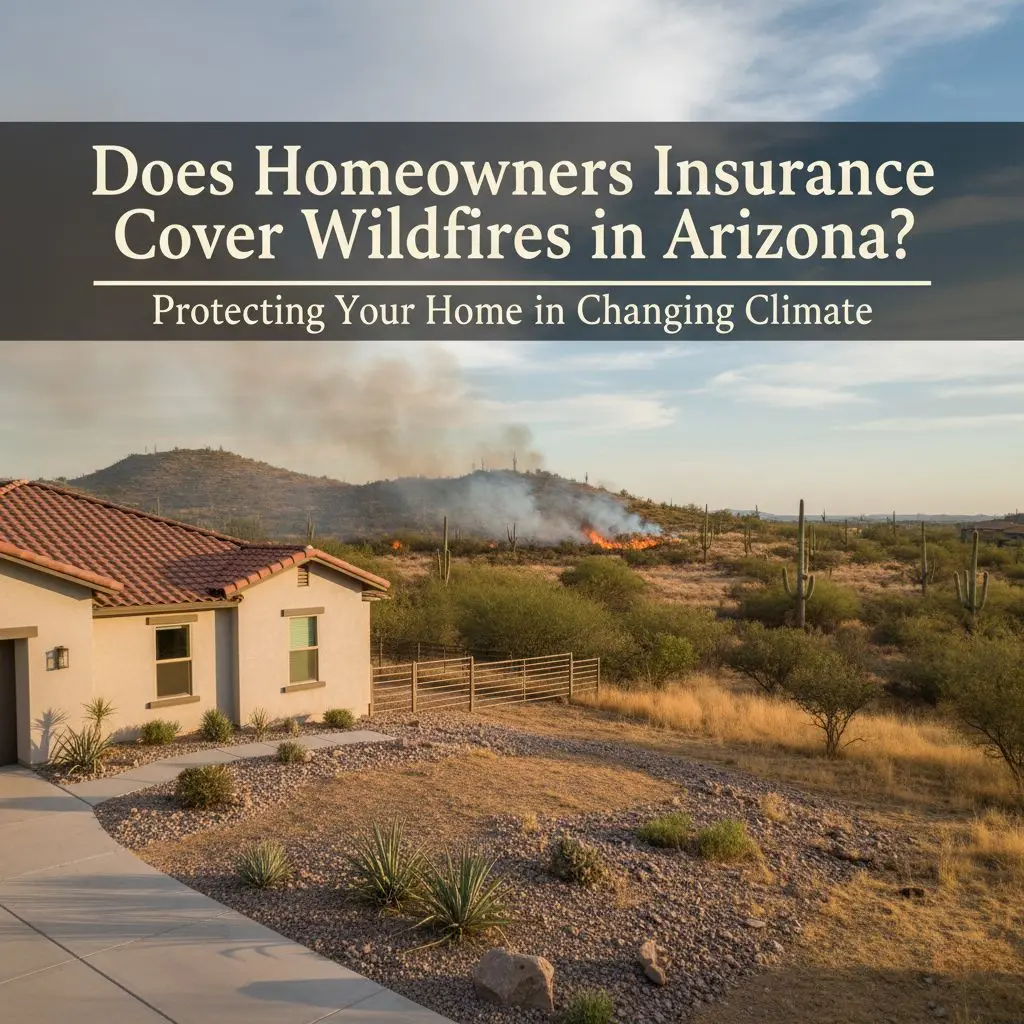
Wildfires have become a recurring threat in Arizona’s dry and often unpredictable climate. From the desert foothills of Maricopa County to the forested highlands around Flagstaff and Prescott, fire risk has increased due to prolonged droughts, urban expansion, and rising temperatures. For homeowners, understanding whether and how their insurance policy covers wildfire-related losses is essential for financial stability and recovery after a disaster.
This article examines the nuances of wildfire coverage within Arizona homeowners insurance policies. It draws on guidance from the Arizona Department of Insurance and Financial Institutions (DIFI) and general national insurance data. The goal is to provide Arizona residents with a comprehensive understanding of what wildfire protection typically entails, where coverage gaps often appear, and how policyholders can strengthen their protection before the next fire season.
Understanding Wildfire Coverage in Arizona Homeowners Insurance
The Basics of Fire Protection
Standard homeowners insurance policies in Arizona generally include fire damage as a covered peril. This typically extends to losses caused by wildfires unless a specific exclusion is written into the policy. In most cases, this coverage applies to the dwelling (the home itself), personal property, and certain related costs such as temporary relocation.
However, coverage is not uniform across all insurers or regions. In areas of elevated wildfire exposure—such as Northern Arizona, where dense forests and dry conditions heighten risk—insurance carriers may modify their underwriting practices. Some may impose higher deductibles, set stricter eligibility standards, or even decline to renew policies that include full wildfire protection.
What Fire-Related Damage Includes
Wildfire damage encompasses more than direct flame destruction. Arizona homeowners may also experience losses from smoke, soot, ash, and heat, as well as damage caused by suppression efforts such as water, foam, or fire retardants. According to DIFI, these secondary effects can often be included within a fire loss claim, provided the damage was a direct result of a covered peril.
Nonetheless, it is vital to read policy language carefully. Some insurers distinguish between “direct fire damage” and “consequential smoke damage,” the latter of which may require additional endorsements or carry separate limits.
Components of Wildfire Coverage
Dwelling Coverage
This section of the policy covers the primary structure of the home—walls, roof, flooring, and permanently attached fixtures. The coverage amount should reflect the replacement cost of rebuilding the home with current materials and labor rates, not the home’s market value. As construction costs rise across Arizona, maintaining an accurate replacement cost estimate is essential to avoid underinsurance.
Other Structures
Homeowners policies also protect detached structures such as garages, fences, sheds, or guesthouses. Typically, this protection equals about 10% of the dwelling coverage limit, though policyholders can request higher amounts. In wildfire-prone rural properties where outbuildings are common, this limit often needs adjustment.
Personal Property
Personal belongings—furniture, clothing, appliances, electronics, and other contents—are covered under personal property protection. Most insurers reimburse losses based on either actual cash value (ACV) or replacement cost value (RCV). ACV subtracts depreciation from the reimbursement amount, while RCV pays the full cost to replace the item with a new one of similar quality. The difference can be substantial following a total loss.
Additional Living Expenses (ALE)
Wildfires often force temporary evacuations or render homes uninhabitable for extended periods. The ALE provision (also called “loss of use”) reimburses reasonable costs for temporary housing, meals, and related living expenses incurred during displacement. This coverage is vital in Arizona communities where extended recovery and rebuilding timelines are common after wildfires.
What May Not Be Covered
Exclusions and Limitations
Even when wildfire damage is broadly covered, policies contain exclusions that can significantly affect claim outcomes. Common exclusions include:
- Neglect or failure to maintain the property, such as not clearing combustible debris.
- Intentional acts or arson.
- Governmental action, including destruction ordered by authorities to prevent further spread.
- Earth movement or flooding following a wildfire, such as mudslides or flash floods caused by vegetation loss.
The last exclusion is particularly significant in Arizona, where monsoon rains can trigger post-fire flooding. Standard homeowners policies do not cover flood damage; separate flood insurance is required through the National Flood Insurance Program (NFIP) or private carriers.
High-Risk Area Challenges
Insurers operating in Arizona’s high-risk wildfire zones may adopt restrictive measures to manage exposure. Some carriers may issue nonrenewals or limit new policies in these regions. Others might impose higher deductibles for wildfire-related losses or require policyholders to maintain defensible space and adhere to specific mitigation standards as a condition of coverage.
When private insurers decline to write policies, homeowners may need to turn to state-backed programs such as FAIR (Fair Access to Insurance Requirements) Plans. While Arizona’s FAIR Plan options are limited compared to other states, these programs can serve as a last resort for those unable to obtain private coverage.
Five Critical Policy Features for Wildfire Preparedness
- Replacement Cost Coverage
Policies based on actual cash value often leave homeowners undercompensated after a major loss. Replacement cost coverage ensures that settlement amounts reflect current rebuilding costs rather than depreciated values. This is especially important in Arizona, where labor shortages and material price volatility can cause reconstruction costs to exceed earlier estimates by 20–30%. - Loss of Use Protection
This coverage bridges the financial gap between displacement and return. Extended hotel stays, restaurant meals, and increased commuting costs are typically reimbursable. It is prudent to verify that the policy includes sufficient ALE limits to cover several months of living expenses. - Debris Removal
After a wildfire, clearing damaged structures and hazardous materials can represent a major expense—often exceeding $10,000 depending on location and property size. Ensuring that the policy includes debris removal coverage (either as a sub-limit or endorsement) can prevent significant out-of-pocket costs. - Comprehensive Inventory Documentation
Maintaining an updated home inventory simplifies claim processing. Photographs, serial numbers, and receipts provide proof of ownership and value. Digital storage—cloud backups or mobile inventory apps—ensures records remain accessible even if physical copies are lost. - Understanding Policy Exclusions
Finally, reviewing the fine print for wildfire-related exclusions or special deductibles is essential. Some insurers exclude smoke infiltration or limit payouts for landscaping and fencing losses. A consultation with a licensed Arizona insurance agent can clarify these terms and identify appropriate endorsements.
How Arizona Homeowners Can Strengthen Their Coverage
Review and Update Coverage Limits
Reassess your dwelling and personal property limits annually. Inflation and rising construction costs can quickly erode the adequacy of prior coverage amounts. Insurers and independent agents can conduct replacement cost estimations to ensure policy limits align with current market realities.
Consider Endorsements and Add-Ons
Supplementary endorsements—such as extended replacement cost (which provides an additional 25–50% beyond the dwelling limit) or ordinance and law coverage (to cover upgrades required by newer building codes)—offer valuable protection. These add-ons can be especially beneficial in Arizona’s older housing stock, where rebuilding to code can increase expenses substantially.
Evaluate High-Risk Area Options
For properties located in wildland–urban interface zones, homeowners should inquire about specialized wildfire insurance programs or state-level assistance options. While Arizona does not have a robust FAIR Plan equivalent to states like California, some surplus lines insurers offer limited coverage packages for homes rejected by standard carriers.
Implement Mitigation Measures
Insurers increasingly consider defensible space and fire-resilient construction when underwriting policies. Actions such as clearing vegetation within 30 feet of the home, using Class A fire-rated roofing materials, and installing ember-resistant vents can reduce premiums and enhance eligibility for coverage renewal. Documentation of these measures also supports future claim validation.
The Claims Process After a Wildfire
Immediate Steps
After a wildfire event, policyholders should first ensure personal safety and comply with local evacuation orders. Once authorities declare the area safe, the claims process should begin immediately. Contacting the insurer or agent as soon as possible allows for early claim number assignment and faster inspection scheduling.
Documentation and Evidence
Photographs and videos of property damage, along with receipts for temporary living expenses, form the foundation of a strong claim file. If emergency repairs are necessary—such as boarding up windows or tarping roofs—keep all receipts, as many policies reimburse reasonable emergency measures designed to prevent further loss.
Adjuster Evaluation and Settlement
An insurance adjuster will assess the extent of the damage and compare it to the policy’s coverage provisions. Homeowners should review the adjuster’s report for accuracy and clarify any disputed valuation or exclusion findings. Maintaining organized communication records with the insurer facilitates timely resolution.
If disputes arise, Arizona homeowners may contact the Arizona Department of Insurance and Financial Institutions (DIFI) for assistance or to file a formal complaint.
Post-Wildfire Hazards: Flood and Erosion
One of the most overlooked consequences of wildfire damage in Arizona is the heightened risk of flooding and erosion. Burn scars reduce soil absorption capacity, allowing rainwater to flow rapidly downhill and cause flash flooding. Standard homeowners insurance does not cover these events.
To mitigate this risk, property owners in post-fire areas should consider purchasing flood insurance through the National Flood Insurance Program (NFIP) or a private insurer. Premiums are typically lower when purchased outside of high-risk flood zones but can provide vital protection against runoff and mudslide damage in the years following a wildfire.
Comparing Arizona’s Landscape of Coverage Challenges
Arizona’s insurance market reflects a broader national trend of increased wildfire-related underwriting restrictions. However, compared to states like California, Arizona still retains a relatively stable market, with most carriers continuing to offer standard homeowners policies that include fire protection.
The key challenges involve affordability and coverage adequacy. Rising replacement costs, coupled with growing wildfire frequency, have led many policyholders to carry insufficient limits or outdated valuations. At the same time, premiums in some high-risk ZIP codes have risen substantially, leading to difficult decisions about balancing affordability with comprehensive coverage.
Independent insurance agents play a pivotal role in helping homeowners navigate these trade-offs by comparing multiple carriers and explaining nuanced policy terms.
Key Takeaways for Arizona Homeowners
- Standard homeowners insurance usually covers wildfire damage, but policy language varies.
- Verify that coverage includes replacement cost value, adequate limits for dwelling and personal property, and loss of use protection.
- Flooding and mudslides after a wildfire require separate insurance.
- Homeowners in high-risk zones should evaluate defensible space, fire-resistant upgrades, and possible alternative market options if traditional insurers decline coverage.
- Annual policy reviews and home inventories are essential for maintaining accurate and effective protection.
Conclusion
Wildfires are an unavoidable element of Arizona’s natural landscape, but the financial devastation they cause does not have to be. A well-structured homeowners insurance policy—built on clear understanding, adequate limits, and proactive preparation—remains the most reliable safeguard against long-term loss.
Homeowners should treat their policy not as a static